Tag: GPU

Reliable by Design: Why NVIDIA Kubernetes Recipes Matter for AI Clouds
AI cloudNovember 10, 2026

Reliable by Design: Why NVIDIA Kubernetes Recipes Matter for AI Clouds

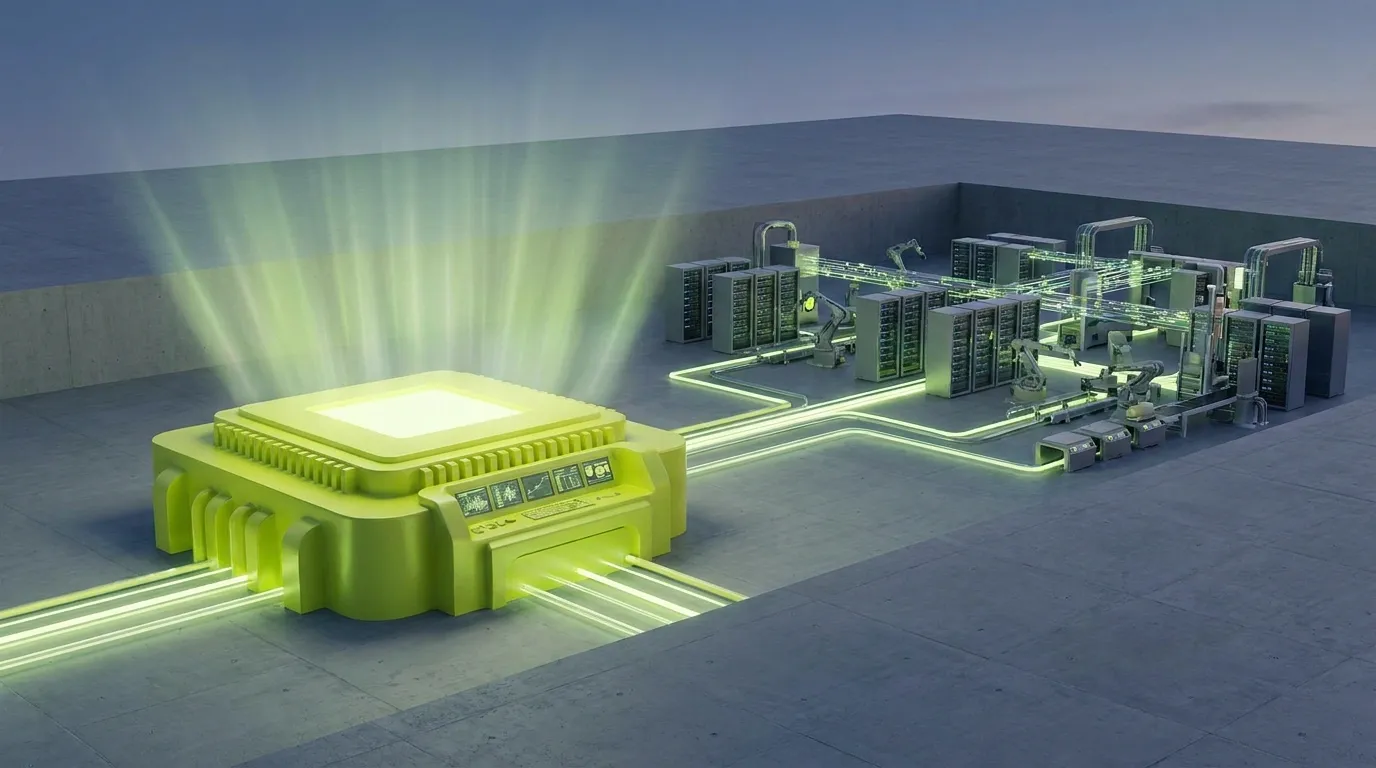
NVIDIA ships a new GPU generation every year, and each one brings new drivers, operators, container images, and node images. For AI cloud providers working toward NVIDIA Cloud Partner (NCP) standards, the challenge is finding the configuration that works out of countless possible combinations of hardware, drivers, and software, and getting there quickly. That’s why Mirantis is looking at NVIDIA Kubernetes Recipes (NVKR), with an eye to what makes it useful for the AI cloud ecosystem broadly.

Mirantis k0rdent AI Certified through the NVIDIA-Certified Hypervisors Program
AI factoryAugust 26, 2026

Mirantis k0rdent AI Certified through the NVIDIA-Certified Hypervisors Program

Virtualizing GPUs only pays if the performance tax is negligible. k0rdent AI passed the NVIDIA-Certified Hypervisors battery on GB200 NVL72 against bare-metal and pure-KVM baselines, with topology-aware VM placement.

Mirantis Powering the Next Generation of AI Factories with NVIDIA DSX OS
AIJune 01, 2026

Mirantis Powering the Next Generation of AI Factories with NVIDIA DSX OS

Mirantis is collaborating with NVIDIA to provide a validated, production-ready software stack, built on open source and open standards. The solution combines NVIDIA DSX OS and Mirantis k0rdent AI to deliver a turnkey, open foundation for building and operating lasting, profitable, AI factories, with the ingrained flexibility to evolve and iterate with rapidly changing technologies and customer requirements.

AI on Kubernetes: How Cloud Native Infrastructure Becomes the Foundation for Intelligent Applications
AI InfrastructureApril 29, 2026

AI on Kubernetes: How Cloud Native Infrastructure Becomes the Foundation for Intelligent Applications

Running AI on Kubernetes is a platform problem, not a GPU problem. Multi-cluster orchestration, multi-tenancy, and the open source AI stack are how it gets solved.

Plug In, Deliver AI: Mirantis k0rdent AI Eliminates Infrastructure Complexity For Multi-Tenant GPU Clouds with NVIDIA NCX Infra Controller
AIMarch 16, 2026

Plug In, Deliver AI: Mirantis k0rdent AI Eliminates Infrastructure Complexity For Multi-Tenant GPU Clouds with NVIDIA NCX Infra Controller

k0rdent AI is powered by NCX Infra Controller, an open-source technology battle-tested inside NVIDIA to manage large-scale GPU fleets. By embedding this technology into our core, k0rdent AI provides a unified control plane that orchestrates the entire stack across the full NVIDIA reference architecture portfolio.

Accelerating AI Cloud Maturity with Mirantis k0rdent AI and the NVIDIA AI Cloud Ready Initiative
AIMarch 16, 2026

Accelerating AI Cloud Maturity with Mirantis k0rdent AI and the NVIDIA AI Cloud Ready Initiative

With Mirantis k0rdent AI, Neoclouds and NCPs can go from zero-to-cloud by leveraging NVIDIA certified hardware, enabling them to capitalize on the economic opportunity from day one.

AI Observability: Tools and Best Practices
AIMarch 06, 2026

AI Observability: Tools and Best Practices

Enterprises running AI workloads in production need clear visibility into model behavior, cost, and reliability. AI observability addresses that need by combining real-time monitoring, tracing, and quality evaluation. Teams use it to optimize performance and control spend; it also helps meet compliance requirements.

Optimizing Inference Costs: The Complete Guide
AIMarch 06, 2026

Optimizing Inference Costs: The Complete Guide

Most of your AI budget will go to inference, not training. Every prompt, every API call, every generated token adds to the bill. For enterprises putting AI into production, that makes inference cost the main lever for sustainable scale.

Improving Inference Latency: Guide and best practices
AI InferenceMarch 04, 2026

Improving Inference Latency: Guide and best practices

Inference latency is the single most visible performance metric in modern AI systems. It is the delay between when a user or system sends a request to an AI model and when a useful response (or the first token, in streaming) is returned, and it directly shapes user experience, cost, and scalability. When inference latency is high or unpredictable, applications feel sluggish, resource bills climb, and scaling becomes harder. Getting inference latency right matters for any team running AI inference in production.

Supercharging Supermicro Bare Metal with Mirantis k0rdent AI for Sovereign AI and Hybrid GPU Clouds
AIMarch 03, 2026

Supercharging Supermicro Bare Metal with Mirantis k0rdent AI for Sovereign AI and Hybrid GPU Clouds

This report details the successful validation of Supermicro’s modular server architecture with the k0rdent AI ecosystem. By unifying bare-metal provisioning, AMD-powered acceleration, and modern virtualization, this stack provides a blueprint for the next generation of AI data centers.

Metal to Model for Neocloud Operators
AIFebruary 23, 2026

Metal to Model for Neocloud Operators

When I talk to Neocloud operators, I usually start with something that sounds simple but changes the frame entirely: Don’t sell GPUs. Sell outcomes. Your customers don’t think in watts. They don’t think in rack density or cooling envelopes. They think about price, latency, reliability, and how fast they can get into production. They think about tokens, models, applications.

LLM Optimization: Techniques and Guide
AIFebruary 23, 2026

LLM Optimization: Techniques and Guide

The way you place models near data, schedule and bin pack GPU workloads, and enforce multi-tenant and sovereignty boundaries has more impact on real-world outcomes than marginal changes in model architecture. This guide focuses on that version of LLM optimization: optimizing how you deploy and operate LLM powered applications on GPUs so that performance, cost, and compliance constraints are all satisfied.

AI Infrastructure Stack: Essentials and Guidelines
AIFebruary 03, 2026

AI Infrastructure Stack: Essentials and Guidelines

As AI adoption accelerates, enterprises must align infrastructure choices with both technical and regulatory realities. The AI infrastructure stack consists of the foundational technologies that support AI workloads below the application layer. Understanding its core components, how the layers connect, and how to optimize them is essential for building scalable and future-ready enterprise AI infrastructure.

AI Agents Are Becoming the Next Computing Platform: Signals Across AWS, Azure, and Google (Through the Lens of re:Invent 2025)
Agentic AI MeshDecember 16, 2025

AI Agents Are Becoming the Next Computing Platform: Signals Across AWS, Azure, and Google (Through the Lens of re:Invent 2025)

Between what I saw on the ground at re:Invent and what we observe across our global user base, a consistent story has emerged: the industry is converging on a new compute architecture: AI agents at the top, foundation models in the middle, Kubernetes underneath, and OpenTelemetry connecting the entire system.

k0s at KubeCon NA: Three Commands, Three Minutes: k0s and the Future of AI at the Edge
AIDecember 11, 2025

k0s at KubeCon NA: Three Commands, Three Minutes: k0s and the Future of AI at the Edge

At KubeCon North America this year, I noticed a consistent pattern in booth conversations. When attendees saw the Mirantis badge, many had similar questions about k0s. After multiple similar exchanges, it became clear that interest in k0s centered on specific use cases rather than general Kubernetes capabilities. Teams wanted Kubernetes that was easier to deploy and manage across multiple locations.

AI Means Big Changes To IT Infrastructure
AI InferenceDecember 05, 2025

AI Means Big Changes To IT Infrastructure

As the world races to deploy increasingly powerful AI models, the limitations of existing technology infrastructure are becoming evident. Today’s public clouds and colocation facilities weren’t built for 40-billion parameter models, 100 kilowatt-per-rack densities or real-time inference for billions of users. High-performance computing (HPC)—also called neoclouds—is emerging, and it's purpose-built for AI. The hope is that this can help enterprises avoid retrofitting existing data centers at high cost, which often stretches facilities beyond their intended design life.